Word Line: Word Puzzle Game
- 4.5
- Rating
- 10.00K
- Installs
- Free
- Price
 Analysis by App-foxy
I enjoy word games that are easy to understand before they become difficult to master, and Word Line: Word Puzzle Game fits that space nicely. The basic idea is immediate: I swipe across letters to form words, then use those words to work through a puzzle. There is no complicated setup to learn, which makes it a comfortable choice for a short break, a quiet commute, or a longer session when I want something more thoughtful than a quick arcade game.
What makes this particular game worth considering is the way its simple gesture creates room for decision-making. I am not only looking for any word I can spot. I am also thinking about which letters to connect first, whether a longer word is worth pursuing, and how much of the board I should reveal before committing to a move. That small layer of planning gives the game more staying power than its short store summary suggests.
It is a free word game from SATORISYS PLAY, rated for Everyone, and it runs on Android devices using at least version 7.1. The current release is 0.0.2, so I approach it as a young game that may still be developing rather than as a huge, established word platform. Its average rating is 4.8 from over 500 ratings, while the game has passed 10 thousand installs. Those figures suggest that early players have responded well, but they also make me keep my expectations realistic about the size of the overall experience.
You May Also Like

 AccuWeather: Weather Radar
AccuWeather Review: A Quick, Clear Forecast for Everyday Decisions
For everyday plans, the best forecast is the one you can understand quickly. AccuWeather makes rain timing, radar, and local conditions easy to act on, with a few trade-offs.

 Hill Climb Racing
Why Hill Climb Racing Still Turns Crashes Into One More Run
A tiny car, a bumpy hill and one more upgrade: Hill Climb Racing keeps resurfacing because its simple chaos makes every near-miss feel personal.

 AliExpress - Shopping App
AliExpress Makes Global Shopping Feel Personal, but Shoppers Bear the Risk
AliExpress turns a global marketplace into a pocket-sized discovery engine. Its reach is useful, its shopping loop compelling, and its trade-offs easy to miss.

 Lords Mobile: Kingdom Wars
Lords Mobile Is a Kingdom-Building Routine, Not a Quick Match
A case-by-case verdict on the building, battles, device demands, and social commitments that make Lords Mobile rewarding for some players and exhausting for others.

 PDF Scanner app - TapScanner
TapScanner Makes Paperwork Easier to Capture, Check, and Share
TapScanner makes scanning with a phone feel less like a rescue operation and more like a dependable step in getting work done. Its capture tools are useful, though not flawless.

 Block Blast!
 Shows How Much a Puzzle Game Can Leave Out
A quiet grid game shows why puzzle players increasingly value instant clarity, repeatable skill and low-pressure play—and where the genre still needs to catch up.
More From Our News Desk
View All News


How the basic swipe-and-solve loop feels
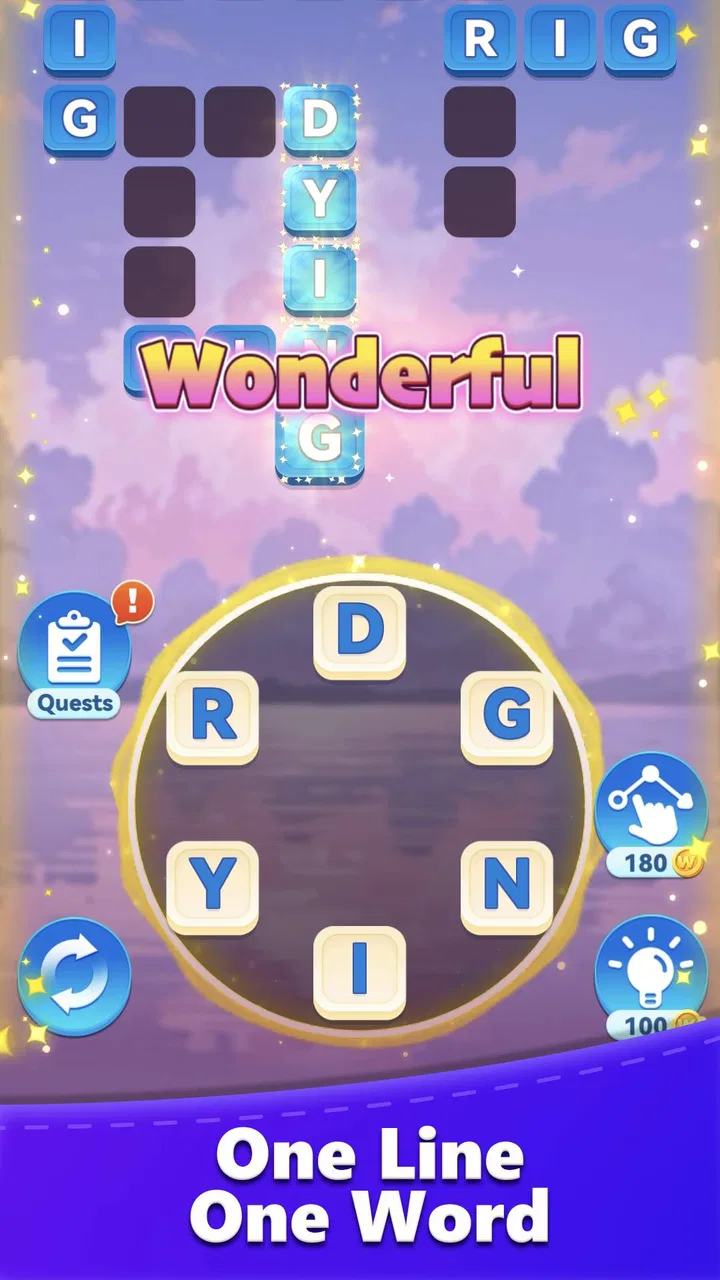
The first thing I noticed is how little friction there is between opening the game and playing. The central action is familiar to anyone who has tried a word puzzle: I scan the available letters, trace a possible word with my finger, and see whether it contributes to the puzzle. Because the interaction is based on swiping rather than typing, I can play with one hand and keep my attention on the board instead of a keyboard.
That matters in everyday use. If I have only a few minutes while waiting for an appointment, I do not want to remember a complicated control scheme or rebuild a strategy from scratch. Word Line gives me a clear starting point. I look for obvious short words first, then check whether those discoveries expose a more useful route through the remaining letters. The process feels calm rather than frantic, which is one of the main reasons I would recommend it to people who prefer relaxed puzzle sessions.
A realistic use case is an evening when I want to put down social media without committing to a full game. I can play a puzzle, pause naturally, and return later without needing the same level of concentration demanded by a timed title. It also works well as a light mental warm-up: I begin by searching for familiar combinations, then gradually pay closer attention to unusual letter arrangements. The game does not need a dramatic presentation to make this loop satisfying.
The most useful habit is to avoid swiping the first word that appears. I usually take a moment to inspect the whole arrangement. A short word may be easy to find, but a longer or less obvious word can sometimes be the better move if it helps clear a troublesome cluster. This is not a claim about a special scoring system; it is simply a more reliable way to approach a board when the goal is to solve rather than to move quickly.
Players who are new to word games should find the learning curve gentle. The gesture is intuitive, and the objective is understandable without a long tutorial. Experienced players, however, will get more from treating each puzzle as a small search problem. I mentally divide the board into familiar prefixes, endings, vowel-heavy groups, and consonant combinations. That approach turns random scanning into a repeatable routine.
Why the simple interface is also a limitation
The same simplicity that makes Word Line approachable may leave some players wanting more variety. If you expect a word game to include extensive modes, elaborate progression, competitive rankings, or a large set of customization tools, this is not the title I would choose without first checking what is available on your device. Its appeal is concentrated in the act of connecting letters and solving puzzles, not in surrounding systems.
I also would not recommend it as a replacement for a serious vocabulary trainer. Finding words in a puzzle is different from studying definitions, building a personal word list, or following a structured language course. Word Line is better for practicing observation and flexible word recognition than for measuring language progress. That distinction is important for parents, students, and anyone choosing a game for educational reasons.
Another trade-off is that swipe-based play can encourage fast guesses. When I rush, I sometimes focus on the most visible letters and overlook a better path elsewhere on the board. The solution is not a hidden trick; it is a change in rhythm. I slow down at the start, identify several possible connections, and only then make the move that seems most useful.
Settings and habits worth checking before longer sessions
With a compact game like this, I do not assume that every useful option is central to the puzzle screen. I check the available in-game settings before settling into regular play, especially options related to sound, vibration, notifications, or other presentation preferences if they appear on the installed version. I do not treat these as strategic features, but adjusting them can make the difference between a comfortable game and an irritating one.
For example, I prefer quieter feedback when playing in a waiting room, while a little sound can make a home session feel more responsive. On an older phone, I also pay attention to whether gestures register consistently. Since the minimum operating system is Android 7.1, the game is accessible to people using older Android hardware, but the experience can still depend on the individual device. Keeping the game updated to its current version, 0.0.2, is a sensible first step if the controls do not feel smooth.
I also recommend checking how the game behaves when you leave it mid-puzzle. A short word game should fit around real life, so I test this early rather than assuming every interruption will be handled in the same way. If I am playing during a commute, I avoid beginning a puzzle when I know I will need to put the phone away immediately. This is a small habit, but it prevents frustration when a session is interrupted at an awkward point.
Experienced users can create a simple personal routine. I begin with a visual scan, look for common word endings, test the most promising connection, and then reassess the remaining letters instead of continuing on autopilot. If the game offers presentation controls on my installation, I set them once and stop changing them during play. The result is a cleaner focus on the puzzle itself.
There is also a practical accessibility consideration. Swiping across small letter areas can be less comfortable for someone with limited precision or a larger display set to a different scale. I would try the game for a few puzzles before recommending it to a player who depends on very large touch targets. The concept is simple, but the physical gesture still needs to feel reliable on the particular phone or tablet being used.
Patterns that make solving faster without making it careless
The fastest improvement I found came from changing how I search. Instead of reading every letter independently, I look for likely word shapes. Common beginnings and endings are useful anchors, as are vowel-consonant patterns that make a word feel pronounceable. Once I spot one anchor, I trace possible routes around it and check whether the neighboring letters support a complete word.
I also separate recognition from commitment. During the first scan, I collect possibilities mentally rather than swiping immediately. This prevents a familiar short word from taking all my attention. After I have inspected the board, I choose the connection that appears to advance the puzzle most clearly. The habit is especially useful when several words overlap or when the most obvious route leaves an awkward group behind.
Another effective routine is to revisit letters after every successful word. I do not assume that the board should be read in the same way from start to finish. A cleared or accepted word can change which combinations stand out, so I perform a fresh scan rather than searching only in the area I was already watching. This is a small but non-obvious advantage of treating each move as a reset point.
When I am stuck, I change the direction of my thinking. I stop hunting for the longest word and search for a familiar suffix, a plural form, or a simple verb instead. If that fails, I examine the letters that have not yet played a role and ask which combinations they could support. This prevents the common mistake of staring at the same attractive cluster for too long.
I would not use a dictionary for every difficult board. Looking up every unfamiliar possibility may help finish a puzzle, but it removes much of the mental work that makes the game enjoyable. A better compromise is to make several independent attempts first, then use outside vocabulary help only when the goal is learning rather than simply completing the board. That keeps Word Line entertaining while turning unusual words into useful discoveries.
For families, I can see a nice shared routine in taking turns finding a word without grabbing the phone from one another. One person can scan for beginnings, another can check endings, and both can explain why a route seems promising. This works better than treating the game as a race, because the value is in discussing the choices. The Everyone age rating also makes it more suitable for mixed-age casual play than many action-oriented alternatives.
Where the game fits among familiar word-game alternatives
Compared with a crossword, Word Line asks for less reading and less dependence on clues. I do not need to interpret a definition or recall a specific fact before making progress. The challenge is more visual and spatial: I am recognizing words inside a letter arrangement. That makes it a better fit for someone who enjoys word discovery but finds clue-heavy puzzles tiring.
Compared with a word search, the swipe mechanic feels more active. I am not merely scanning a fixed grid for hidden entries; I am choosing a connected path and adjusting my plan as the puzzle develops. The difference is subtle, but it gives each move a stronger sense of participation. On the other hand, people who love large themed grids may prefer a traditional word-search app with a broader visual field.
Compared with a typing-based word game, this one is more comfortable for quick, one-handed use. I do not have to switch between looking at the letters and finding keys on a keyboard. That makes it a good choice on a small phone. A typing game may still be better for someone who wants spelling speed, competitive pressure, or a more direct test of recall.
Word Line is also less suitable than a vocabulary app for deliberate study. A vocabulary-focused alternative can provide definitions, pronunciation, repetition schedules, and progress tracking. I would choose that kind of tool for language learning. I choose this game when I want a lighter activity that rewards pattern recognition without turning the session into homework.
Advanced limits and the kind of player who may skip it
The main limitation is not that the core idea is weak; it is that the core idea has to carry the experience. Players who need constant novelty may find a swipe-and-solve format narrow after the initial appeal. I would skip it if my priority were a deep campaign, a persistent collection system, or a large competitive community. The early install count and review volume indicate a smaller footprint than the biggest names in the word category, so I would not expect the same ecosystem around it.
I would also hesitate to recommend it to someone who dislikes trial and error. Even with a careful scan, a word puzzle can require several attempts before the useful route becomes clear. The game is most enjoyable when I see an unsuccessful move as information about the board rather than as wasted time. If I want instant certainty or a purely relaxing activity with no moments of uncertainty, a simpler matching game may be a better fit.
There is a practical device trade-off as well. Android 7.1 support makes the game available to older devices, but older hardware can vary in touch response and screen sensitivity. A player with a phone that misses quick swipes may blame the puzzle when the real issue is input accuracy. I would test a few deliberate gestures before deciding whether the game suits the device.
The current version also makes me view the game as an early-stage experience. That is not automatically negative: a focused game can be enjoyable without a long feature list. Still, I would choose a more mature alternative if I needed a proven long-term routine with extensive tools. For casual play, the compact scope is acceptable; for a daily word-game commitment, I would first see whether the available puzzle variety continues to hold my attention.
One advanced habit that helps is setting a stopping point. I play until I solve a small group of puzzles or until I notice that I am making rushed guesses, then I stop. This prevents the familiar word-game problem of continuing after concentration has faded. Because the game is free, it is easy to try without financial commitment, but free access does not mean it will suit every playing style.
My verdict after using it as a daily puzzle break
Word Line: Word Puzzle Game succeeds because it keeps its main action clear. I swipe, form words, reassess the available letters, and work toward a solution. That loop is approachable for newcomers but still rewards players who develop a deliberate scanning method. I especially like it for short sessions where I want something mentally active without the pressure of a timer or the complexity of a large game system.
The strongest reason to try it is its balance between accessibility and small-scale strategy. I can hand it to a casual player and explain the idea quickly, yet I can also improve my own results by studying word patterns, delaying obvious moves, and rechecking the board after each connection. Those habits are more valuable here than frantic swiping.
My reservations are equally clear. It should not be mistaken for a full vocabulary course, a competitive typing test, or a feature-heavy word platform. Players who need extensive modes, advanced progression, or a mature community may outgrow it. The early version number also encourages me to judge it as a focused, developing game rather than a complete replacement for every other word app.
For me, the best audience is someone who enjoys calm word puzzles, wants a free game for occasional breaks, and likes discovering solutions through visual patterns. I would recommend trying it on the intended device, checking the available presentation settings, and giving the swipe response a few minutes to become familiar. If that gesture feels natural, the game offers a pleasant little routine: scan carefully, choose with purpose, and let each solved word reveal a better way to read the next puzzle.
FAQs for Word Line: Word Puzzle Game
01What is the main objective of Word Line: Word Puzzle Game?
The primary goal of Word Line: Word Puzzle Game is to enhance your vocabulary and spelling skills by connecting letters to form words. As you progress through levels, the difficulty increases, offering a challenging yet rewarding experience. It's designed to be engaging for all ages, making learning fun and interactive.
02Are there any in-app purchases in Word Line: Word Puzzle Game?
Yes, Word Line: Word Puzzle Game offers in-app purchases. While the game is free to download and play, users can purchase hints or remove ads for a more seamless experience. These purchases are entirely optional and not necessary to enjoy the full game experience.
03Can Word Line: Word Puzzle Game be played offline?
Absolutely! Word Line: Word Puzzle Game is designed to be played offline, making it perfect for travel or areas with limited internet connectivity. You can enjoy the game without worrying about data usage, though some features like updates and in-app purchases require an internet connection.
04Is Word Line: Word Puzzle Game suitable for children?
Yes, Word Line: Word Puzzle Game is suitable for children as it promotes learning through play. The game encourages vocabulary building and problem-solving skills in a fun and engaging way. Parents can feel confident that the content is appropriate for younger audiences.
05How does Word Line: Word Puzzle Game enhance cognitive skills?
Word Line: Word Puzzle Game enhances cognitive skills by challenging players to think critically and creatively. It improves vocabulary, spelling, and pattern recognition as players connect letters to form words. The progressive difficulty ensures that players continuously engage their minds, making it both educational and entertaining.
Pros
- Challenging puzzles enhance vocabulary.
- Intuitive and user-friendly interface.
- Offline mode available for on-the-go play.
- Regular updates with new levels.
- Minimal ads enhance user experience.
Cons
- Limited hints without purchase.
- Repetitive gameplay after extended use.
- Some puzzles can be too easy.
- Occasional performance lags.
- In-app purchases can be pricey.

Word Line: Word Puzzle Game
Gallery